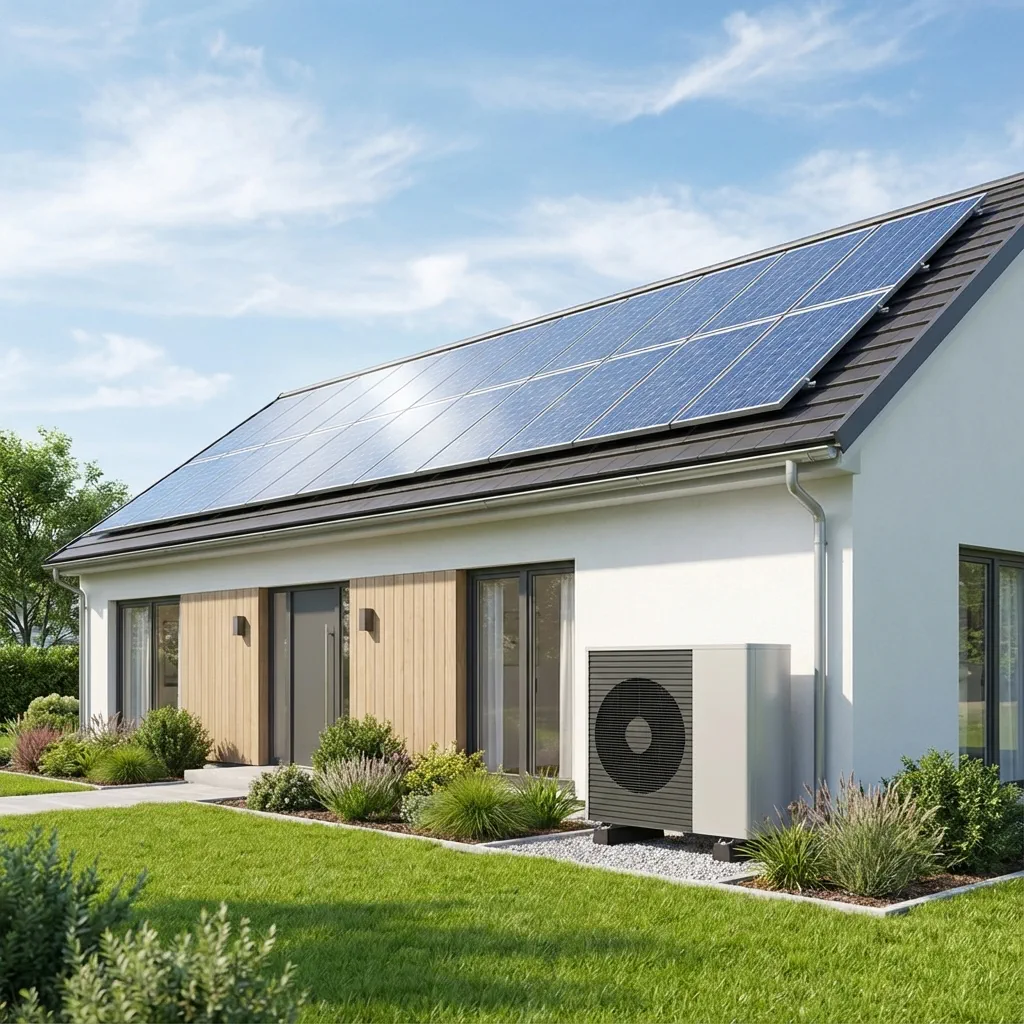
Air source heat pumps (ASHPs) are becoming increasingly popular in the UK as a more environmentally friendly alternative to gas or electric heating. They get heat from the air outside - yes, even when it’s cold - and use it to warm your home and your water. A frequent worry for people considering one is how much it will cost to run. This explains the actual expense of an ASHP and suggests ways to keep those costs down.
Unlike a normal boiler that burns fuel to create heat, an ASHP uses electricity to power a compressor and pull heat from the outside air. The heat pump then boosts this heat to a temperature you can actually use in your home, usually with underfloor heating or radiators designed for lower temperatures. Because of the way they work, they generally use less energy than traditional heating, leading to both lower bills and a smaller carbon footprint.
Several things will affect how much an ASHP will cost you to run: your electricity price, the heat pump's efficiency (called COP), how good your home’s insulation is, how much heat you need and at what temperature, and how well the pump is maintained.
Firstly, because ASHPs are powered by electricity, the price of your electricity is a big factor. Electricity costs in the UK have been going up and down, so finding the best deal is important. You might want to look at a fixed price or a 'green' energy tariff for more predictable bills.
Secondly, the efficiency of the heat pump itself is key. This is measured by the Coefficient of Performance (COP). A higher COP means you get more heat for each unit of electricity the pump uses. Most modern ASHPs have a COP of and around 3 or 4 - they make 3 or 4 kWh of heat for every 1 kWh of electricity they take.
Thirdly, a well-insulated house keeps the heat in, so the heat pump doesn't have to work as long or as hard. If your home loses heat easily (through poor insulation or draughts) you'll need to use more energy to stay comfortable.
Fourthly, the size of your house, how warm you like it, and how long the heating is on all influence costs. A smart thermostat or other heating controls can help you to use the system efficiently and avoid wasting energy.
Finally, regular servicing ensures the ASHP runs at its best and doesn't waste energy, which would push up running costs over time.
The Energy Saving Trust estimates that heating with an ASHP usually costs between £300 and £500 a year for a house with reasonable insulation. This is typically cheaper than electric or LPG heating and is similar to, or a little less than, older gas boilers when you consider how efficiently they work and how much the price of gas goes up and down.
To get an idea of your running costs, you can do this: find your home’s yearly heating needs in kWh (this will be on your Energy Performance Certificate), divide that number by the COP of your heat pump (say, 3.5), and then multiply the result by the cost of a unit of electricity (in pence per kWh). So, if your home needs 12,000 kWh a year and your heat pump's COP is 3.5, the pump will use about 3,429 kWh of electricity (12,000 ÷ 3.5). At a price of 34p/kWh, that’s roughly £1,166 a year. This shows how important good insulation and cheaper electricity are to keeping the costs down.
You can lower your running costs by improving your home’s insulation - in the loft, walls, and floors, and by using double or triple glazing to cut down on heat loss and help the heat pump work more efficiently. Using smart heating controls, including programmable thermostats and zone heating, ensures you only heat rooms when you’re using them, and so saves energy. And take advantage of government help! The UK Government's Boiler Upgrade Scheme offers grants towards the cost of installing a heat pump (which lowers the initial cost and might mean you invest more in making your home energy efficient). Also, if you have your ASHP with renewable electricity generation you may qualify for the Smart Export Guarantee. Even just turning the heating down a little or having it on for less time can make a big difference to the bill without you feeling any colder.
Before getting an ASHP, think about these points: they usually provide heat at a lower temperature, so you might have to replace old radiators with bigger, or low-temperature, ones. The unit outside needs a good spot with plenty of air around it and shouldn't be too noisy for your neighbours. Although the installation is usually more expensive than for a traditional boiler, it should pay for itself in lower running costs and because of the government grants. You also need to think about how it will work with your hot water system - will you have a backup heater or a thermal store?
In conclusion, air source heat pumps are a sustainable and potentially affordable way to heat your house, but you need to understand and manage the running costs. By looking at your home’s insulation, your electricity tariffs and using the system efficiently, you can save money and do your bit for the environment.
If you’re considering an ASHP, use what you’ve learned here to plan carefully and get advice from qualified installers who can assess your home and give you a good estimate of running costs.
For more information on saving energy in your home and grants available, visit Green Home Report and keep up with the latest energy efficiency advice in the UK.
Ready to save on your energy bills?
Use our free calculator to see how much you could save with solar panels, battery storage, or a heat pump.
Get Your Free Report