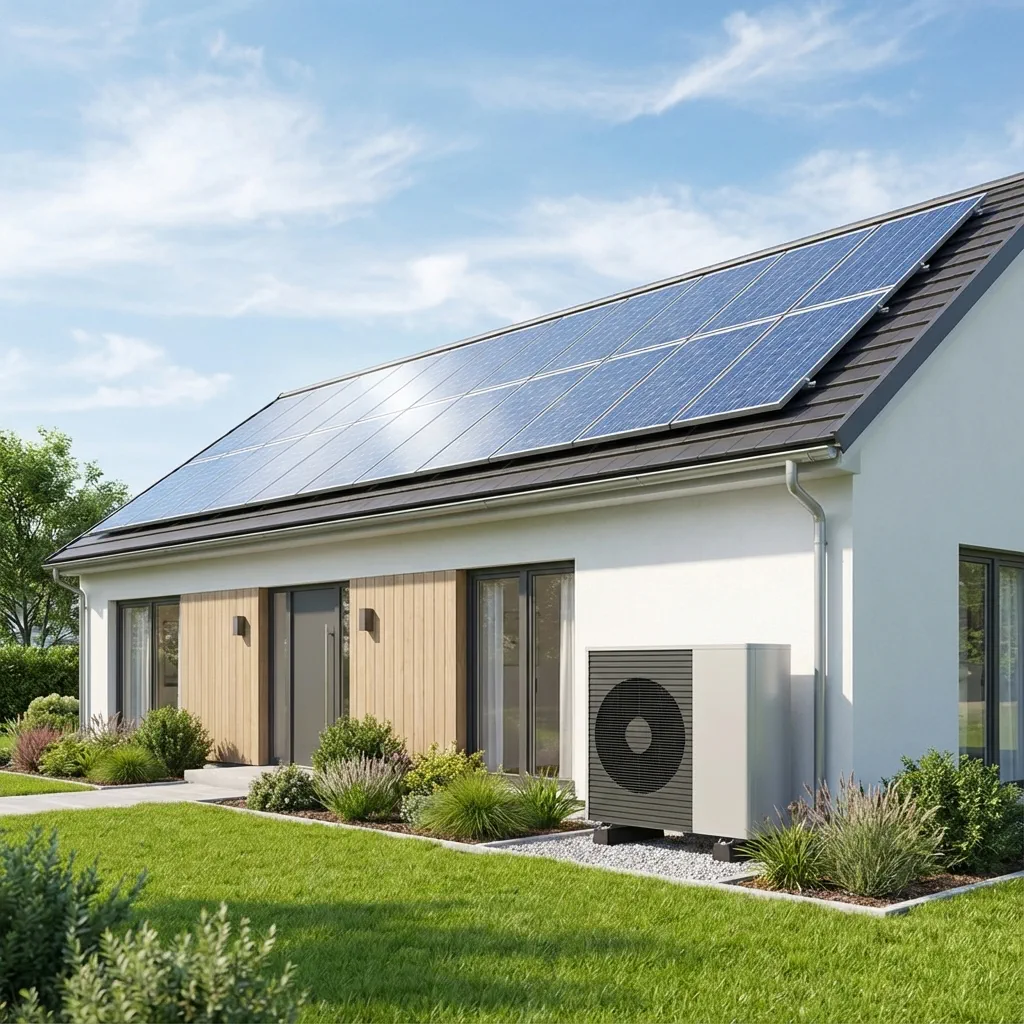
As energy prices keep rising, more homeowners across the UK are turning to renewable options to lower their bills. Two of the most talked-about technologies are solar panels and heat pumps. On their own, both can save you money and cut emissions. But when used together, they become far more effective.
This guide explains how combining solar panels and heat pumps could be the smartest move for your home. It covers the practical savings, how the systems work together, and what to consider before investing.
How Solar Panels and Heat Pumps Work Together
Solar panels: Clean power from your roof
Solar panels convert sunlight into electricity. That electricity can power your home or feed into the grid. During sunny days, you can generate a decent chunk of your daily energy use for free. This is especially useful during daylight hours, when energy rates are higher.
Heat pumps: Efficient heating and cooling
Heat pumps work like a fridge in reverse. They pull warmth from the air or ground and transfer it into your home. They use electricity, but they produce much more heat than the energy they consume. A well-installed heat pump can run at 300% efficiency or more.
The combined benefit
The clever bit: solar panels can power your heat pump. This reduces the need to draw electricity from the grid, especially in spring and autumn when you need light heating but have decent sun. You get lower bills and fewer carbon emissions, all while keeping your home warm.
Real-World Savings and Efficiency
A year-long study in Birmingham (Project 80) tracked homes using both systems. The results were strong:
- 40% to 67% lower energy use compared to the UK average
- Over £200 saved per year on bills with a well-designed heat pump alone
- Homes only used one-third of the energy allowed under the national grid capacity
Solar panels add to these savings. A 3-5 kW system can cut energy bills by £500 to £700 per year. And with the cost of panels falling 19% over the last decade, payback times are now around 10-12 years. Since panels last 25-30 years, that's a solid return.
Plus, you're protected from energy price spikes. By generating your own power, you rely less on the grid. That makes your household budget more predictable.
Financial Benefits and Incentives
Installing these systems is not just about monthly savings. There are other financial gains too:
- VAT relief: There's currently 0% VAT on domestic solar until at least 2027.
- Smart Export Guarantee: Get paid for extra energy you send back to the grid.
- Property value boost: Homes with solar and heat pumps are more attractive to buyers and renters.
Some studies suggest homes with strong energy ratings can fetch up to 14% more on the market compared to similar homes without upgrades.
To get the most from your investment, system size and design matter. You'll need to think about roof size, shading, insulation, and energy use habits. Adding a battery can also help store surplus solar power to use later in the evening.
Geopolitical and Supply Chain Challenges
One concern with renewables is the supply chain. A large share of key materials for solar panels and batteries comes from China. That includes:
- 95% of global polysilicon wafers (used in solar panels)
- 80% of lithium-ion cells (used in solar batteries)
Recent export rules and tax changes have already caused a 20% rise in solar module prices.
The UK's energy policy relies heavily on imports, which can make us vulnerable to international price changes. That's why many experts are calling for greater local manufacturing and supply diversification.
Still, these risks don't cancel out the long-term value. They highlight the need for planning and resilience in how we grow clean energy use.
A Smarter Way to Cut Emissions and Use Less Energy
Beyond the bills
Switching to solar and heat pumps does more than save money. It reduces your carbon footprint and supports the UK's net-zero targets. Replacing gas boilers with heat pumps cuts emissions. Adding solar means that more of your electricity comes from a clean source.
Example: A low-carbon home in practice
A typical UK home needs about 6,600 kWh of energy per year after switching to a heat pump. A solar system rated at 8.2 kW can cover most or all of this demand. One home even generated surplus energy, avoiding 0.7 tonnes of CO₂ in a year.
Is It Right for You?
Before making the switch, think about the following:
- Insulation: Good insulation improves heat pump efficiency.
- Roof orientation: South-facing roofs get the most sun.
- Shading: Trees or nearby buildings may affect solar performance.
- Tariffs: Look into time-of-use tariffs to make the most of your self-generated power.
If you're unsure, tools like The Green Home Report offer free, no-obligation reports. They analyse your property using AI and satellite data to estimate costs, savings, and suitability for solar and heat pumps.
Final Thoughts
Combining solar panels and heat pumps is one of the best long-term choices UK homeowners can make to reduce bills and help the planet. While the upfront cost can be a hurdle, incentives, savings, and property value gains make it a smart financial move.
More than that, it's a step towards a cleaner, more self-sufficient home. If you're planning home improvements, now is the time to think beyond insulation and double glazing. With the right setup, your home could generate more energy than it uses.
FAQs
How much can I save by combining solar panels with a heat pump?
Savings vary, but many households save between £700 and £900 per year on energy bills.
Do I need a battery for the system to work well?
Not always, but a battery helps store extra solar energy for use in the evenings, improving savings.
Will I still need a gas boiler?
No. A properly installed heat pump can fully replace a gas boiler for most UK homes.
Is there financial help available?
Yes. You can benefit from 0% VAT, the Smart Export Guarantee, and local grant schemes like ECO4.
What about planning permission?
Most homes won't need planning permission for solar panels or air-source heat pumps, but always check with your council first.
Ready to save on your energy bills?
Use our free calculator to see how much you could save with solar panels, battery storage, or a heat pump.
Get Your Free Report