For a UK homeowner, there are few things as good for the bottom line and the planet as putting in some solar panels. As electricity prices go up and we become more mindful of our carbon footprint, it’s no surprise that more of us are looking into photovoltaic systems. But before you put pen to paper with an installer, you should have a handle on what the law says.
You’ll likely be wondering at some point: do I have to go through the planning system to put these on my roof? Getting to grips with the rules on solar panel planning permission in the UK is the best way to avoid any headaches or wasted cash down the line.
The Short Answer
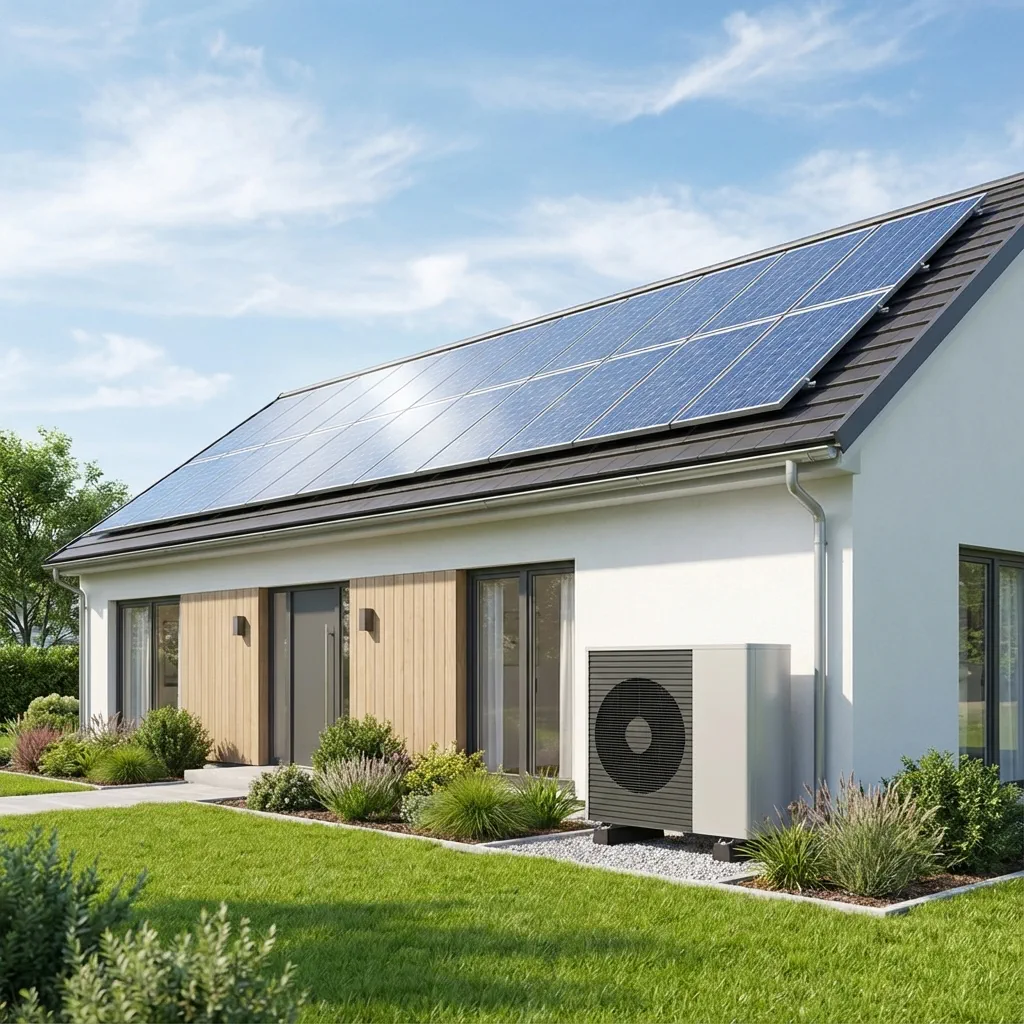
Generally speaking, if you live in England or Wales, you don’t need to apply for planning permission for a home solar setup. Most of the time, this is covered by permitted development rights, so you can get on with it without the red tape. This is true for both wall and roof mounts, as long as you’re in the clear.
That said, there are a few caveats. Your property’s make-up, where it is, and how big the job is could mean you have to get the nod from your local authority first.
What Permitted Development Means
These rights are there to let you make certain changes to your home without having to ask for permission. They’ve been tweaked in recent years to give a leg-up to renewables, since they are key to the UK hitting its net-zero targets.
Once you tick the right boxes – like making sure you have building regs approval and the work is up to standard – you’re good to go.
The fine print
To be within permitted development for a rooftop install, you have to follow a few ground rules:
- The panels can’t stick out more than 200mm from the roof’s slope
- You can’t put them any higher than the top of the roof (chimneys aside)
- On a flat roof, they have to be under a metre from the highest point
- When they’ve had their day and you don’t need them for power anymore, they have to come down
As long as you are in line with this and your house isn’t, say, a listed building, you won’t need to file a planning application.
A case for planning permission
There are times when you will have to put in a formal request:
Listed buildings: If you have one, you need consent for any external work, solar included. It doesn’t matter if you can see them from the road.
Conservation areas: You are under a bit of a microscope here. Even with permitted development, you can’t put panels on a wall that looks out over a highway or waterway.
World Heritage Sites and AONBs: These are protected for a reason. If your panels would be in plain sight and change the feel of the place, you may be restricted.
Over the top: If your plan involves a lot of structural work or is just too big, you’ll need to get the green light from the council.
What about the garden?
Some of you with a bit of space might be eyeing up a ground-mounted system. The rules are a little different but they are still permitted development if:
- They are 9 square metres or less and no taller than 4m
- They are 5 metres or more from your boundary
- You aren’t in a listed building or near a scheduled monument
- The garden isn’t being turned into a power plant
If you want something bigger or can’t meet those numbers, you’ll have to talk to the council.
Don’t confuse the two
Make sure you know the difference between planning and building regulations. One doesn’t replace the other. Even with no planning permission, your work has to be up to code. We’re talking about making sure the roof can hold the weight, the electrics are safe and there’s no fire risk. A good installer will sort the paperwork with building control for you.
Do your due diligence and check they are accredited, like with the Microgeneration Certification Scheme (MCS). It’s not only a mark of quality but it’s what you need to be in with a chance of the Smart Export Guarantee for the power you put back on the grid.
For the more historic homes
If you are in a conservation area or have a listed property, you have to be a bit more careful. There is a world of difference between planning permission and listed building consent. The latter is its own thing and you’ll need it for any work that might alter the character of a listed property.
In a conservation area, the rules are a bit more specific. You’re not allowed to put solar panels on a wall that can be seen from a public road or waterway without the proper permission. But if you are looking at the roof on a side of the house, you may be in with a chance under permitted development.
When in doubt, have a word with your local planning authority or look up the National Heritage List for England. Your solicitor would have put some of this in front of you when you bought the place, so it’s worth a review.
Leasehold and Rented Homes
If you are in a leasehold flat or a rental, you have to deal with more than just the council.
As a leaseholder, you will usually need the go-ahead from the freeholder. Some leases are plain about not allowing you to tinker with the outside of the building. While some newer ones are being made more amenable to green energy, a lot of the old ones are not.
For tenants, you must get written approval from your landlord. It doesn’t matter if you don’t need planning permission; your tenancy agreement has its own rules and you could be on the hook for your deposit if you don’t ask.
How to Apply
If you do have to put in an application, expect it to run for about eight weeks once they’ve validated it. You’ll be asked for:
- A site and location plan
- Elevations of where the panels will go
- A design and access statement
- The fee (and this will depend on where you are)
A lot of councils will give you pre-application advice for a small fee. It’s a good way to see if your plans will fly before you commit to a full application and avoid having to start over.
In most cases, you’ll be fine unless there are some hard-nosed design or amenity issues. The authorities are well aware of the value of renewables and tend to look kindly on a well-thought-out domestic setup.
Neighbours and Curb Appeal
It is only sensible to think about how your home looks and what your neighbours might say, even if the law doesn’t force you to. Panels are in plain sight from the street and over the garden fence, and a haphazard job can cause friction.
You can now get all-black models that don’t stand out as much against the tiles. Or there are the new integrated solar tiles, though they are more of a project to put in.
A chat with the people next door can head off trouble down the line, whether it’s about shading, glint, or if you ever want to add to the system.
The Money Side of Things
Don’t let the red tape make you forget about the incentives. The Boiler Upgrade Scheme is for heat pumps, but you might be in with a run for it with a solar thermal system.
For standard PV, the Smart Export Guarantee is what you want. It means the big suppliers have to put money back in your pocket for any power you put back on the grid. You do need to be MCS-certified and under 5 megawatts for that.
Then there is the 0% VAT on the install, which runs until 2027 and makes a dent in the initial outlay.
Don’t Make These Mistakes
We see it time and again with UK homeowners:
- Not checking if you are in a conservation area or have a listed building. You could be ordered to rip out a finished job and pay for it.
- Thinking you have permitted development rights when you don’t. Some have been taken away by the council after past changes.
- Letting the panels stick out more than 200mm. It’s a hard limit, especially on a low-pitch roof.
- Forgetting to get listed building consent for something like external cabling for an inside unit.
- Hiring an installer who isn’t up to scratch or lacks MCS accreditation. That could cost you your right to the Smart Export Guarantee.
In a Nutshell
Most of us in the UK can put up solar panels without a second thought to the planners. It’s a simple process that has opened the door to clean energy for a great many of us.
But if you are in a protected zone or have a listed building, you can’t be hasty. Do your homework first and you won’t have any issues.
Whether you are ready to go or still in the research phase, knowing the ins and outs of the planning side of things is the best way to move forward. Get a good installer and some preparation in, and you’ll be set for years of cheap, clean power.
Ready to save on your energy bills?
Use our free calculator to see how much you could save with solar panels, battery storage, or a heat pump.
Get Your Free Report