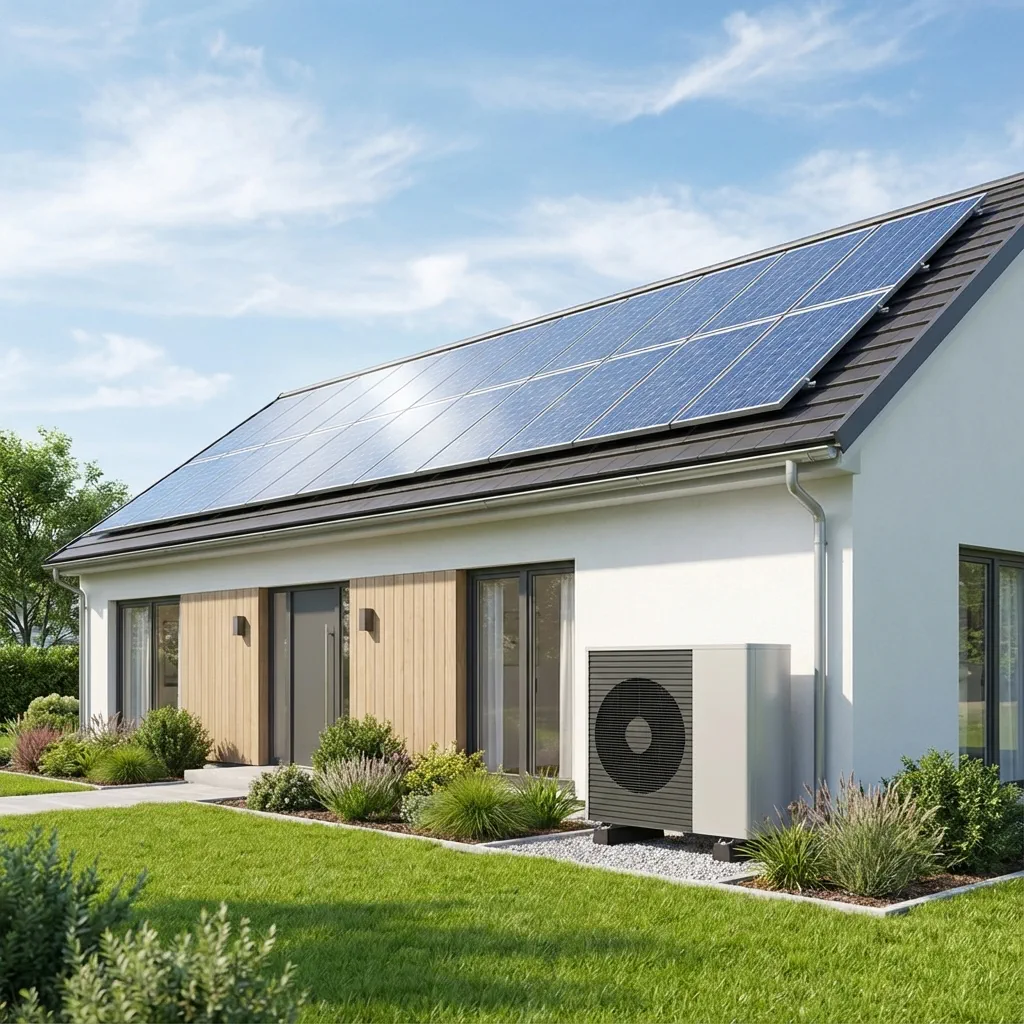
Putting solar panels on your house is a big expense – usually between £5,000 and £10,000 for a normal family home. But as well as immediately lowering your electricity bills and your impact on the environment, many homeowners are curious whether ‘going green’ actually makes you money when you eventually sell. How much solar panels increase your house price isn't simple; it changes a lot depending on where you are, the details of your system, and what the property market is doing.
When people look around houses, they’re now much more likely to think about how much it will cost to run the place, alongside the price of buying it. Saving energy has gone from being something only a few people cared about, to being a main priority, and that’s especially true with how unpredictable gas and electricity prices are. Because of this change in what people want, lots of buyers are now specifically looking for homes with solar panels, seeing them as a way to save money over the years, not just as a way of being kind to the planet.
The UK housing market has really changed its mind about renewable energy. Ten years ago, solar panels weren’t seen very often, and people who didn't understand them were often suspicious. Now, with over a million homes having panels on the roof and more and more people being worried about climate change, panels are something people want that help a property stand out in a competitive area.
Buyers are particularly pleased with solar if they understand how much money they’ll save right away. A system of the right size can cut your yearly electricity bill by hundreds of pounds, depending on how much electricity you use and which direction your roof faces. For families who work from home, or households that use a lot of power during the day, those savings build up quickly, and a house with solar is cheaper to run than a similar one that gets all its power from the usual electricity company.
Several important things decide how much value the panels add.
First, how you own the panels is critical. If you’ve completely paid for them, they move to the new owner with all the benefits and no ongoing costs. This is the most valuable situation, as the buyer gets something they’d have to pay for themselves.
However, if you’re leasing the panels, or have a special finance deal, things get complicated during the legal side of selling. The buyer will have to agree to continue with the existing agreement, which might mean monthly payments, or rules about looking after and insuring the panels. Some people don't like these complications and might not offer as much for the house, or even be put off completely. Being upfront about how you own the panels early in the sale avoids problems at the last minute.
How the panels look and how well they’re fitted also affect what buyers think. Panels professionally fitted onto a strong roof are reassuring, but if you’ve fitted them yourself, or the system is old, people might worry about how long they’ll last and if they’ll be damaged in bad weather. Newer panels with black frames and a neat fitting often blend in with the roof tiles – especially on a south-facing roof - and don't look too obvious, which is good for buyers who care about how a house looks.
If a property is in a conservation area, or is a listed building, there are extra rules. You need permission to do things, and how things look is important, so solar panels in these places have to be put in very carefully. If they have been carefully fitted and the permissions are in place, they can still increase the value. But badly done or unauthorised installations could actually make it harder to sell.
The amount of electricity your panels make is important to buyers who know what they’re looking at. Bigger systems that produce enough electricity for a large part of the household use are particularly good value. When you’re selling, showing actual figures of how much electricity the system has made (from a monitor or smart meter) helps the buyer get a realistic idea, rather than relying on estimates.
South-facing roofs with no shadows work best in the UK. East/West facing can still be good, but the electricity is made at different times of the day. Buyers like it when you’re honest about what the system can do; saying it’s better than it is loses you trust, but a clear discussion about how much it will save throughout the year and how long it will take to get your money back builds confidence.
Several financial schemes make solar even more attractive.
The Smart Export Guarantee (SEG), which began in January 2020, makes larger energy companies pay you for any extra electricity you send back to the grid. It replaced the Feed-in Tariff, and continues to provide an income that moves to the new owner of the house. When you’re selling a house with solar panels, mentioning the SEG shows that there’s an income stream that will help with the monthly bills.
The amount you get from different companies varies, usually between 3p and 15p per kilowatt-hour, depending on the deal you choose. Having a good export rate makes your position when negotiating the sale stronger, as buyers know they’re getting the equipment and a good financial arrangement.
Finally, solar panels improve your Energy Performance Certificate (EPC) rating, and might move your property into a better band. Higher EPC ratings are now influencing buyers more and more, and as the minimum energy efficiency standards for rented properties become more widely known, this is increasing. Better ratings also mean lower running costs, which strengthens the argument for buying a house with solar. If you’re putting in solar panels specifically to boost your house’s resale price, getting an updated EPC (Energy Performance Certificate) after installation officially confirms the improvement in its rating, and gives estate agents and potential buyers solid proof.
How much more a home is worth because of solar really depends on where it is. In the south of England, where the sun shines brightest and you get the most electricity (and therefore the biggest savings), people are naturally willing to pay more for solar. In Cornwall, Devon, or the southeast, solar is much more valuable than in the cloudier north of Scotland, where it doesn't generate as much power each year. In towns and cities with high house prices and people who care about the environment - Brighton, Bristol, or the greener London boroughs, for example - solar is particularly appreciated. In the countryside, though, where people are more focused on land, outbuildings and the possibility of farming, those things are often more important than how energy efficient the house is. And, of course, how much electricity costs in the area influences things; higher than average prices make the savings from solar more significant, and therefore make solar more attractive to buyers.
Solar isn't guaranteed to always add value, despite all the advantages. Old systems nearing the end of their life may need a new inverter or repairs to the panels themselves, and that understandably worries people about how much they’ll have to spend. Buyers will deduct potential repair costs from their offer, which could wipe out any extra money the solar would normally bring in. Systems that weren’t put in the best position – perhaps the previous owner didn't understand which way the roof should face for maximum sun - might not work very well and won't save much, and that won't excite buyers. Similarly, a system that’s the wrong size for how much electricity the house uses will seem either a waste of space or inadequate. And if someone is planning a big renovation, including extending the roof or changing the structure, the solar panels might even be a problem – something they’d have to remove, and so they become a cost rather than an asset.
To get the most money for your solar when you sell, being prepared is key. Collect all the paperwork: the installation certificate, the warranty details, records of any maintenance, and how much electricity the system has made over time. Buyers like to see you’re open about everything and have proof of how well the system has performed.
Use an estate agent who’s used to selling energy-efficient homes and can explain the benefits of solar to people who come to look around. Ask them to specifically mention the solar panels in the description of the house and how much money they’ll save, or how much you get from the SEG (Smart Export Guarantee). When people visit, have your recent electricity bills ready to show them how much less you’re paying than before the solar was installed. And think about when you sell in relation to how old the system is; those between five and fifteen years old usually give the best return, because they've proven they work and have a good amount of life left. A brand new system, where you haven't yet saved the installation cost in reduced bills, might not be good timing unless you can get a really high price.
Solar is at its most valuable when combined with other ways of saving energy. Adding a battery to store the electricity made during the day for use in the evening massively increases how much of your own power you use and how little you need from the grid. This is particularly attractive to people who are planning to get an electric car or who want to be as energy-independent as possible. And combining solar with new heating (often with help from the Boiler Upgrade Scheme) can create a home that doesn't doesn't rely on gas or oil. Homes that could run on zero carbon are particularly interesting to people who are very environmentally conscious and will pay more for a sustainable lifestyle. Improving the insulation, getting double or triple-glazed windows and stopping drafts so heat doesn't escape all mean the solar panels go further, and improve the value for the new owners.
So, do solar panels increase a home’s value? The evidence says they can, if everything is in the right place. Systems that are owned, in a good location, well maintained and with all the paperwork, appeal to buyers who want to save on energy and have predictable bills. The lower bills, the money from the SEG and the better EPC rating all add up to a good reason for people to make a competitive offer.
But don't think of solar only as a way to make your house worth more. Installing it typically costs more than the immediate increase in the sale price; the financial benefit depends on how much you save on your bills while you live there. If you’re going to move within two or three years of having it installed, it’s unlikely you’ll get your money back through the sale.
For those who plan to stay in their home for the medium to long term, solar offers both significant savings on your bills while you live there and a more attractive property when you eventually sell. Ultimately, whether solar panels increase a home’s value comes down to choosing good quality equipment, getting it put in by professionals, keeping all the paperwork and then selling the property to people who understand and appreciate the benefits of renewable energy.
As energy prices continue to fluctuate and environmental rules get stricter, homes with solar are likely to be worth even more. Buyers these days generally expect energy efficiency as a given; homes that go further than that with solar power will be in a much better position when it comes to selling. So, whether you’re thinking about getting solar installed or preparing to sell a system you already have, understanding this will help you get the most from your investment in renewable energy.
Ready to save on your energy bills?
Use our free calculator to see how much you could save with solar panels, battery storage, or a heat pump.
Get Your Free Report