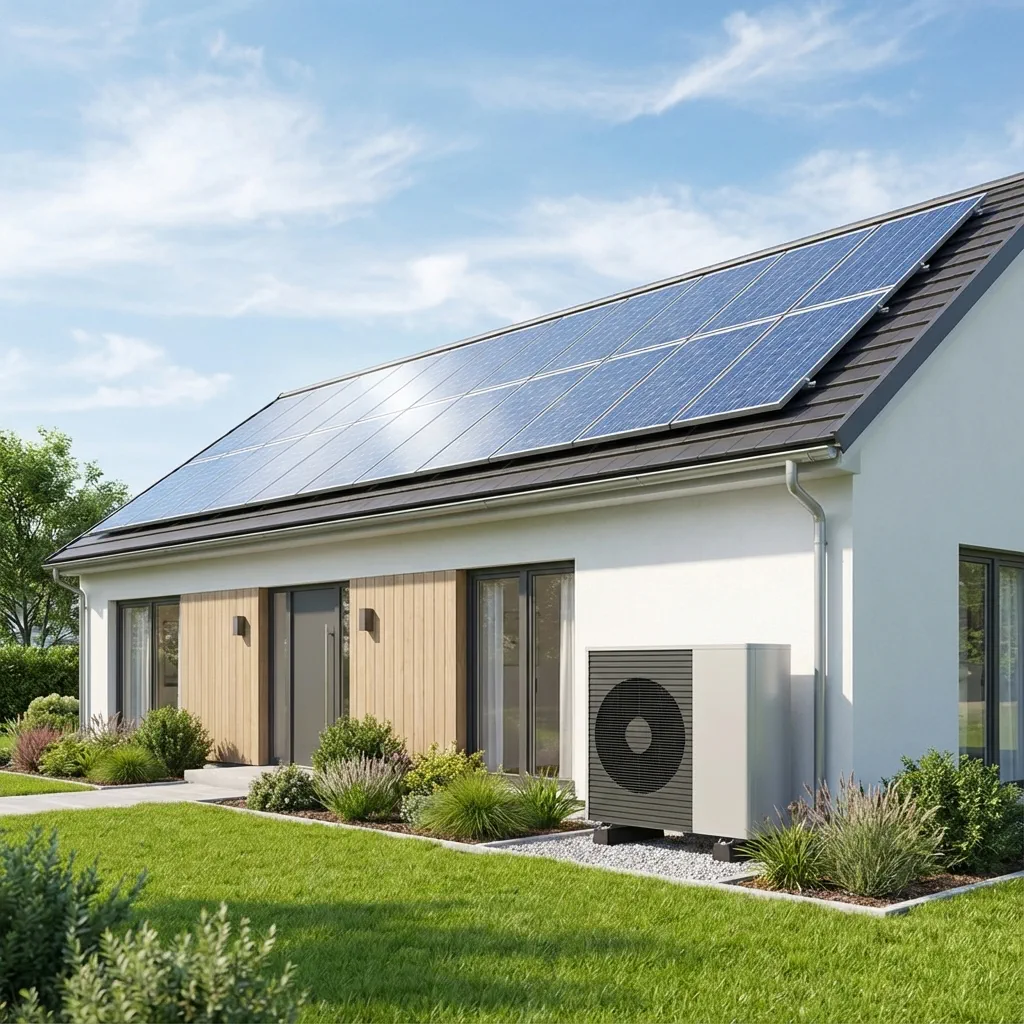
As energy bills climb and climate concerns grow, more UK homeowners are turning to renewable energy. But before you invest in solar panels, heat pumps or battery storage, it's important to know whether your property is suitable.
This guide breaks down everything you need to check, from your roof's angle to planning permission, and from local wind speeds to insulation levels. Think of it as a straightforward, no-nonsense checklist to help you decide if renewable energy is the right fit for your home.
Solar Panels: Is Your Roof Ready?
Roof Angle and Direction
For solar panels to work well in the UK, your roof should ideally face south. East- and west-facing roofs still work, but may generate less power. A pitch between 30° and 40° is ideal, though flat roofs can be adjusted with mounting kits (usually at an added cost).
Shading and Space
Trees, chimneys or nearby buildings that cast shadows over your roof will affect performance. A clear, unobstructed area is best. You'll also need around 2 square metres of space per 1 kWp of solar capacity.
Roof Strength and Condition
Solar panels add weight. Older roofs might need reinforcing, especially if repairs are due soon. It's wise to get a structural survey first.
Roof Material
Tile roofs are usually fine. Slate or metal roofs may need special fittings. Always check this with your installer.
Electrical Setup
Your home needs enough space and capacity for the system, including inverters and isolators. Check your consumer unit and talk to a qualified installer.
Planning Considerations
Most domestic solar installs fall under "permitted development". But if you live in a listed building or conservation area, you might need planning permission.
Heat Pumps and Battery Storage
Government Support
The Boiler Upgrade Scheme offers up to £7,500 off the cost of an air-source heat pump. The scheme now also covers some heat batteries and air-to-air systems.
Efficiency and Demand
Heat pumps work best in well-insulated homes. They use electricity to generate heat, so pairing them with solar panels and battery storage can maximise savings and reduce grid use.
Batteries: Worth It?
Battery prices have dropped to around £92-£96 per kWh (as of 2025). They let you store excess solar power and use it later, especially useful during the evening peak.
Considerations
- Good insulation is key for heat pump efficiency
- Tariffs affect the value of battery systems
- Homes off the gas grid may benefit more
Planning Rules and Grid Connections
What You Need to Know
If your setup connects to the grid, you may need to apply under the G99 process, especially if you're exporting more than 3.68 kW.
Permitted Development
Most roof-mounted systems are allowed without planning permission. But ground-mounted systems, listed properties, and conservation areas often need approval.
Export Limits
Single-phase homes are usually capped at 3.68 kW export without upgrades. This may change from 2025 with reforms designed to ease grid connection delays.
NESO & CMP 435
New rules prioritise "ready-to-go" projects and penalise delays. Battery storage can help you work around local export limits.
Is Wind Power a Real Option?
Micro-Wind Basics
Turbines rated 1–3 kW can supplement your electricity use but rarely cover it all. They work best in rural or coastal areas with steady wind speeds above 5 m/s.
Not for Everyone
Wind systems struggle in urban areas due to turbulence from buildings and trees. They're not ideal for city homes.
Professional Surveys Are a Must
Use wind meters or data loggers to measure your location's wind over several months. Structural surveys are also needed to check the site can support a turbine.
Planning Complications
Planning permission is often needed for wind turbines. Each local authority has different rules, especially in protected areas.
Final Checks: How to Self-Assess Your Home
Here's a quick checklist to help you work out if your home might be suitable for renewables:
- Is your roof south-, east- or west-facing?
- Is the roof pitch between 30° and 40°?
- Is the roof in good condition and structurally sound?
- Do you have space for panels (approx. 2m² per kWp)?
- Are there trees or chimneys causing shade?
- Is your home well insulated?
- Do you have an EPC rating of C or above?
- Is your existing heating system old or due for upgrade?
- Are you in a conservation area or listed property?
- Do you have access to off-street parking (for EVs)?
- Are you on a single or three-phase power supply?
If you answered "yes" to most of these, your home is likely a good candidate for renewable energy.
About Us
The Green Home Report helps UK homeowners get instant, tailored insights into their home's energy potential. We use satellite imagery, EPC data and AI to give you a personalised energy report in seconds, with no surveys or commitments needed. You'll get practical advice on solar panels, heat pumps and more, including cost estimates, savings potential and carbon impact.
FAQs
Do I need planning permission for solar panels?
Most rooftop solar systems in the UK don't need planning permission. But check with your local authority if you're in a listed building or conservation area.
Can I install a heat pump in an old house?
Yes, but insulation matters. Older homes might need upgrades like loft or cavity wall insulation to get the best from a heat pump.
What size battery do I need?
It depends on your energy use and solar system size. Many homes opt for 5–10 kWh batteries. A professional installer can advise.
Is wind power worth it for city homes?
Usually not. Wind speeds in urban areas are often too low and inconsistent for effective generation.
How much space do solar panels take up?
Roughly 2 square metres per 1 kWp. A typical 4 kW system would need around 8–10 panels and 16–20 square metres of space.
Ready to save on your energy bills?
Use our free calculator to see how much you could save with solar panels, battery storage, or a heat pump.
Get Your Free Report