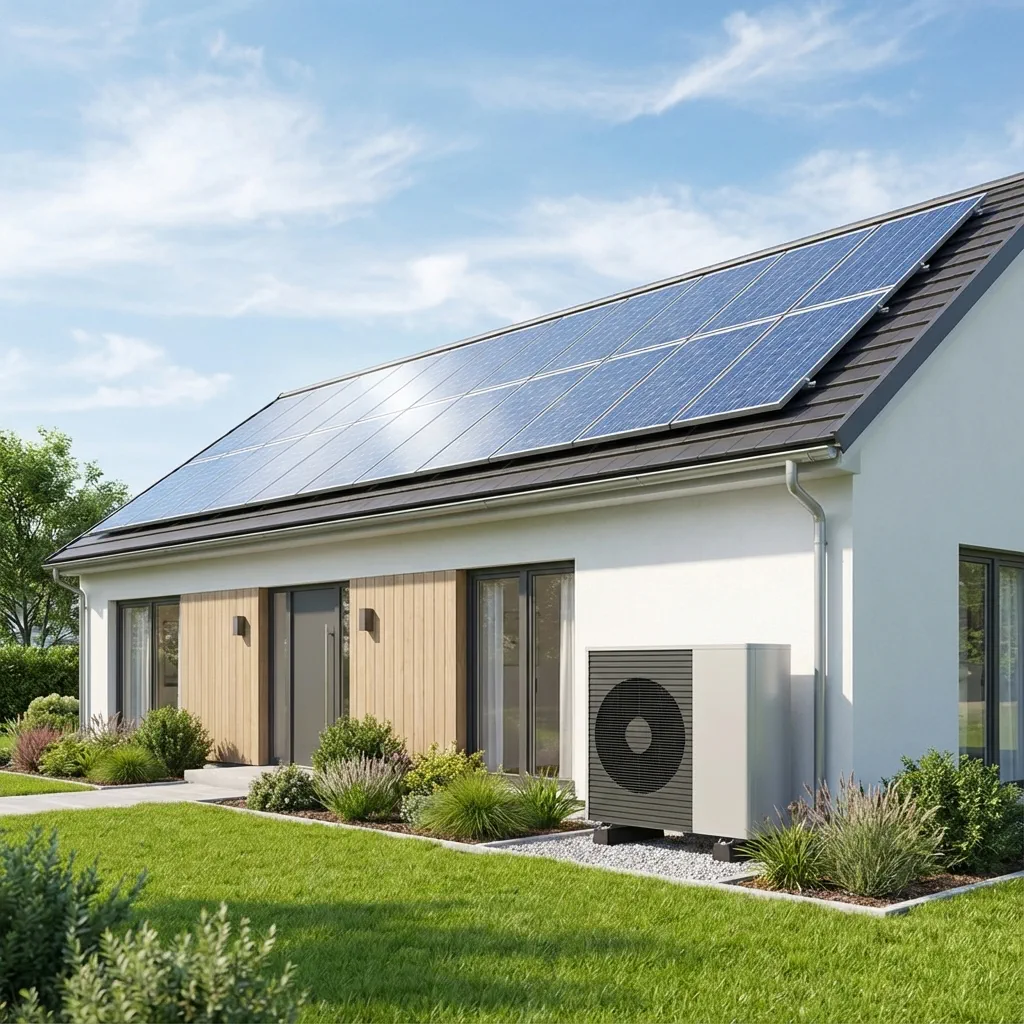
Solar photovoltaic (PV) systems let you generate electricity at home using sunlight. They work by turning daylight into power you can use for your lights, appliances, and everyday needs. Over time, this can cut your energy bills and reduce how much electricity you buy from the grid.
Thanks to better panel technology, lower installation costs, and rising energy prices, solar panels have become one of the most popular renewable upgrades for UK households.
How a Solar PV System Works
Most home solar PV systems include three main parts:
1. Solar Panels
The panels are usually fitted to your roof. They're made up of photovoltaic (PV) cells that react to sunlight. When daylight hits the panels, they generate direct current (DC) electricity, even on overcast days, though they work best in full sun.
2. Inverter
The electricity your panels produce is DC, but your home runs on alternating current (AC). The inverter's job is to convert the DC electricity into AC, so it can power your household devices and systems.
3. Battery (Optional)
Some homes also use a battery to store unused electricity. This stored power can then be used later in the day, like in the evening when your panels aren't generating. While batteries aren't essential, they can increase how much of your own solar energy you use, instead of sending it back to the grid.
What Happens to the Power You Generate?
Your home always uses the solar electricity first. If your system is producing more than you're using at the time, the excess can either:
- Go into a battery (if installed), or
- Be sent back to the grid, usually under the Smart Export Guarantee (SEG), which pays you for it.
Using more of your own solar power (known as self-consumption) is usually where the biggest savings come from.
Why Get Solar Panels?
The main benefits for homeowners include:
- Lower electricity bills
- Protection from future energy price rises
- Smaller carbon footprint
- More energy independence
- Potential earnings from selling unused electricity
That said, results vary from home to home.
Why Solar Savings Vary
Solar panels don't offer the same results for every house. Your potential savings depend on several factors:
- Roof size, direction, and how much shade it gets
- Your location and typical sunlight levels
- When and how you use electricity in your home
- Whether you're home during the day
- Whether you have a battery
So even two houses on the same street could see very different results, depending on these details.
Is Solar Right for Your Home?
Solar can be a smart investment, but only if it suits your home and lifestyle. To make an informed decision, you need to understand how your home uses electricity and what a system could realistically deliver.
That's where Green Home Report comes in.
Green Home Report looks at your specific home, not just UK averages. It provides an independent, address-level view of how solar panels and other upgrades could perform on your property. This includes potential savings, output, and suggested next steps.
Thinking About Solar Panels?
Before asking for quotes, it's worth knowing what your home can actually deliver. That way, you can make decisions based on facts, not guesses.
Green Home Report gives you a clearer view of what's possible, so you can choose solar with confidence.
Ready to save on your energy bills?
Use our free calculator to see how much you could save with solar panels, battery storage, or a heat pump.
Get Your Free Report